


Glass, Reimagined: The Science Behind VITRUM Surfaces
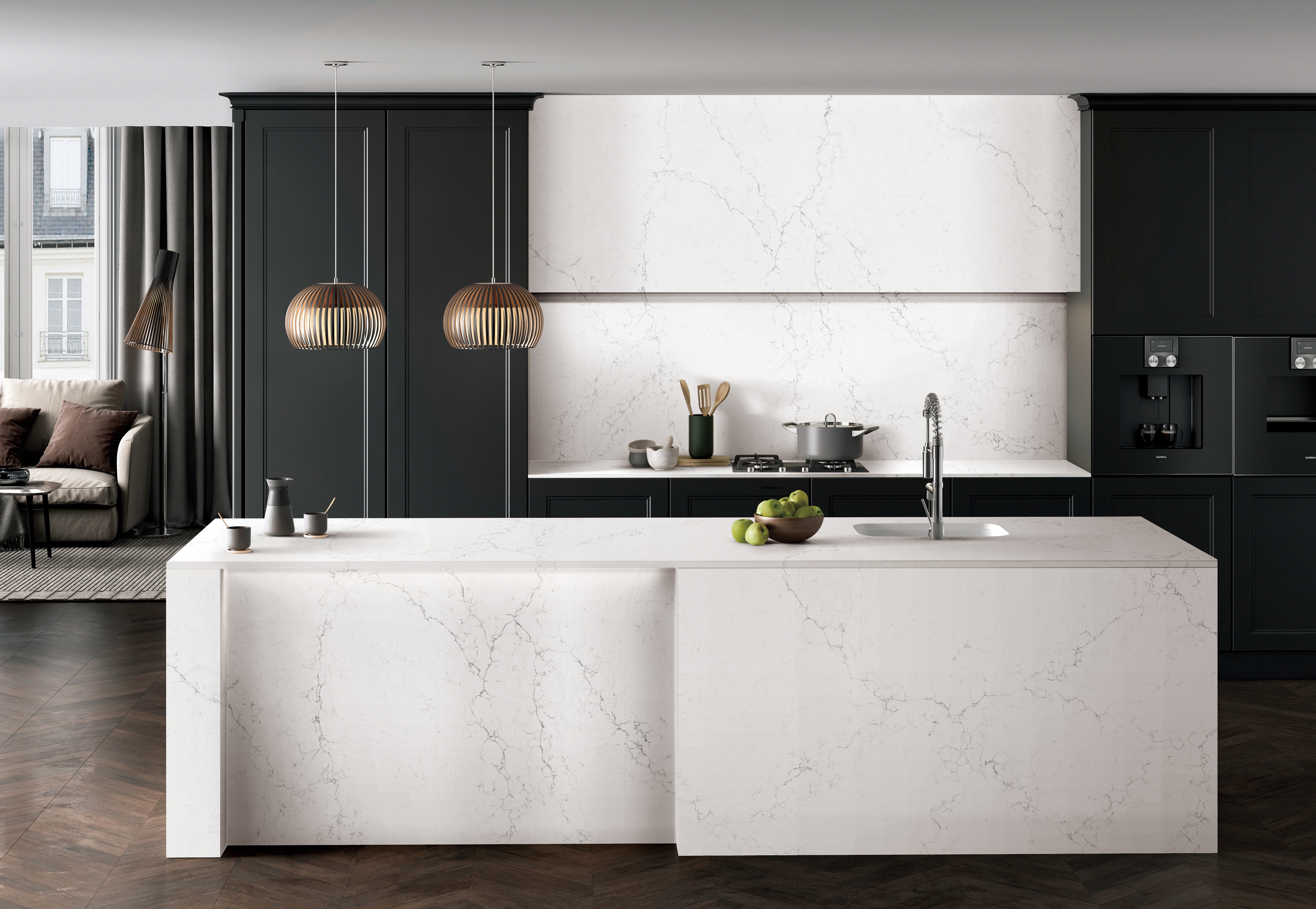
If you've been searching for stone benchtops in Perth, chances are VITRUM is now in your results and there's a good reason for that. Our surfaces are what the stone benchtop market evolved into when safety standards changed and the best materials suppliers turned to glass-resin composites instead of crystalline silica-based products.
When you place your hand on a VITRUM surface, you're touching something that's fundamentally different from traditional engineered stone. In composition, in performance and in the way it was designed. Here's what goes into every slab we make and why it matters.
The Core Composition: Glass and Resin
Our surfaces are made from up to 86% amorphous glass and 14% advanced resin binders. That's the formula. Simple on paper, yet genuinely sophisticated in execution.
Amorphous glass is glass in its non-crystalline form. Unlike crystalline quartz (the material at the heart of traditional engineered stone) amorphous glass doesn't carry the silica particle risk that led to Australia's 2024 regulations. It's a fundamentally different material structure and that difference matters in every stage of the product's life: manufacturing, fabrication, installation and daily use.
Why We Chose Amorphous Glass
Our choice of amorphous glass as the primary aggregate wasn't just about safety, though that matters enormously. Glass as a surface material brings a specific set of performance characteristics that suit the demands of benchtops, vanities, wall cladding and commercial surfaces.
Glass is inherently non-porous. That means liquids (fruit juice, red wine, coffee, tea, nail polish, liquid food dyes) sit on the surface rather than seeping into it. Wipe them away and they're gone. There's no absorption, no staining, no need to seal the surface before use.
Glass is also dimensionally stable. It doesn't expand and contract with temperature variation the way some natural and composite materials do, which means a VITRUM surface holds its shape and its joins over time.
What That Means in Practice
The performance specifications of a VITRUM surface reflect its composition. The material is scratch, impact, crack and corrosion resistant. It's waterproof and frost resistant, relevant in both indoor and outdoor WA applications. It's hygienic and appropriate for food preparation areas without any special treatment.
There's no sealing required on polished surfaces. The factory finish is the working finish. And our product is backed by a 10-year limited warranty on product defects because we're confident in what we've built.
How VITRUM Compares to Traditional Stone Benchtops
People searching for stone benchtops in Perth are typically looking for a surface that's durable, low-maintenance and visually strong. VITRUM delivers on all three and in several areas, goes further than traditional stone benchtops could.
Traditional engineered stone benchtops required sealing on certain finishes and were porous to varying degrees depending on the product. VITRUM is non-porous across all finishes - no sealing, ever. Traditional stone benchtops could chip or stain with prolonged exposure to certain liquids. VITRUM is stain resistant against fruit juice, wine, coffee, tea, nail polish and liquid food dyes. And of course, the crystalline silica content that defined most stone benchtops is entirely absent from our formula.
One Important Note: Heat Tolerant, Not Heatproof
Every VITRUM surface is heat tolerant. It will handle brief, incidental heat exposure without damage. But like any premium surface material (natural stone included) it is not heatproof and hot cookware should never be placed directly on it. A trivet or hot pad is always recommended.
This isn't a limitation unique to VITRUM. It's the honest reality of premium benchtop surfaces, stone or otherwise and we've always been upfront about it.
A Design Range Built on This Foundation
The glass-resin formula also unlocks something important for design: versatility. Our slabs are produced at 3215mm x 1615mm x 20mm, a generous format that accommodates large spans, waterfall edges and architectural applications. Our colour ranges span from the accessible and affordable SELECT range through PREMIUM, CLASSIQ and the marble-inspired MARMO collection.
The material does the performance work. Our design focus does the aesthetic work. Together they produce surfaces that hold up in real kitchens and look genuinely considered doing it.
In Part 5, we turn to the question that's been building through this series: why VITRUM? Where did the name come from and what does it say about the product and the people behind it?

